You might only be working out for 45 minutes, but your body keeps burning calories long after your session’s over.
This all contributes to your total daily energy expenditure, or TDEE. And, while your workouts play a role, a large portion of the energy you expend throughout the day comes from the movement you do outside of them – which is where NEAT exercise comes in.
But what does NEAT exercise look like?
It’s all that smaller, incidental movement you do across your day: from typing on a keyboard to walking to the fridge. When you start choosing to move more often, these small actions begin to add up, helping you get more out of your training.
In this guide, we break down how to increase the calories you burn through NEAT exercise, with simple ways to move more, use more energy, and support your fitness results – whether you’re taking on the F45 Challenge, or simply smashing your way through your daily F45 workout.
What Is NEAT (Non-Exercise Activity Thermogenesis)?
NEAT (non-exercise activity thermogenesis) is the energy you burn through everyday movement outside of training¹.
It includes all the incidental exercise you do without thinking, like walking between places, cleaning, carrying groceries, or even shifting position throughout the day.
While this kind of energy use naturally won’t meet the high intensity of a cardio workout, it still adds up. NEAT exercise helps increase energy expenditure and increase calorie burn across your day¹.

7 ways to increase your NEAT and incidental activity
TDEE is your total daily energy expenditure. It’s the total of all the energy you use throughout the day: your workouts, as well as the movement you do outside of them.
If you want to know how to increase TDEE, focus on NEAT exercise. Below, we demonstrate how you can increase the number of calories you burn with a few small, but mighty, habits.
1. Walk more often
Heading to work? Stepping out for a quick coffee, or running to the grocery store? Make walking your default. You’ll increase energy expenditure without changing your routine.
Look at your day and find small chances to add it in. That could be heading to your local F45 studio on foot, parking a little further away, or getting off your bus a stop early.
In addition to valuable NEAT exercise, this time also gives you precious time to reset. Walking boosts endorphins and dopamine, helping you stay focused so you can keep showing up consistently – whatever daily challenge you’re taking on.
2. Schedule movement breaks
Sometimes, we can get so focused on a task that we look up and realize we haven’t left our desks in three hours. When you stay still for long periods, your potential for NEAT exercise drops, so you miss out on easy opportunities to use more energy.
The solution? Build in regular movement. Get up every 60 to 90 minutes and reset – even if it’s just to stand up and stretch your legs. Research shows that even short bursts of movement can help maintain muscle and metabolic activity – helping to increase calorie burn after long periods of sitting2.
Try this quick micro-circuit:
- 20 squats
- 10 push-ups
- One-minute plank
3. Choose stairs over elevators
Take the stairs whenever you can.
Each climb doesn’t just get you closer to where you need to be – it acts as a short burst of aerobic exercise that raises your heart rate. (Not to mention helping you avoid that awkward elevator small talk!) These mini spikes increase energy expenditure and improve heart rate variability, helping your body adapt to changes in intensity.
That carries into your training. As F45 trainer and athlete Hoon Choi explains, “F45 cardio workouts are built around fast intervals, so you’re constantly dealing with spikes in effort. Something as simple as taking the stairs helps build that capacity, so you can handle those moments and keep pushing through the session.”
4. Increase intensity within workouts
When you train, look for small ways to push a little further. Run a little harder, take the extra rep, or lift slightly heavier when you can.
Increasing intensity raises your metabolic rate, so you use more energy during and after your workout. This increases your daily energy use and makes that everyday, incidental exercise feel easier to do.
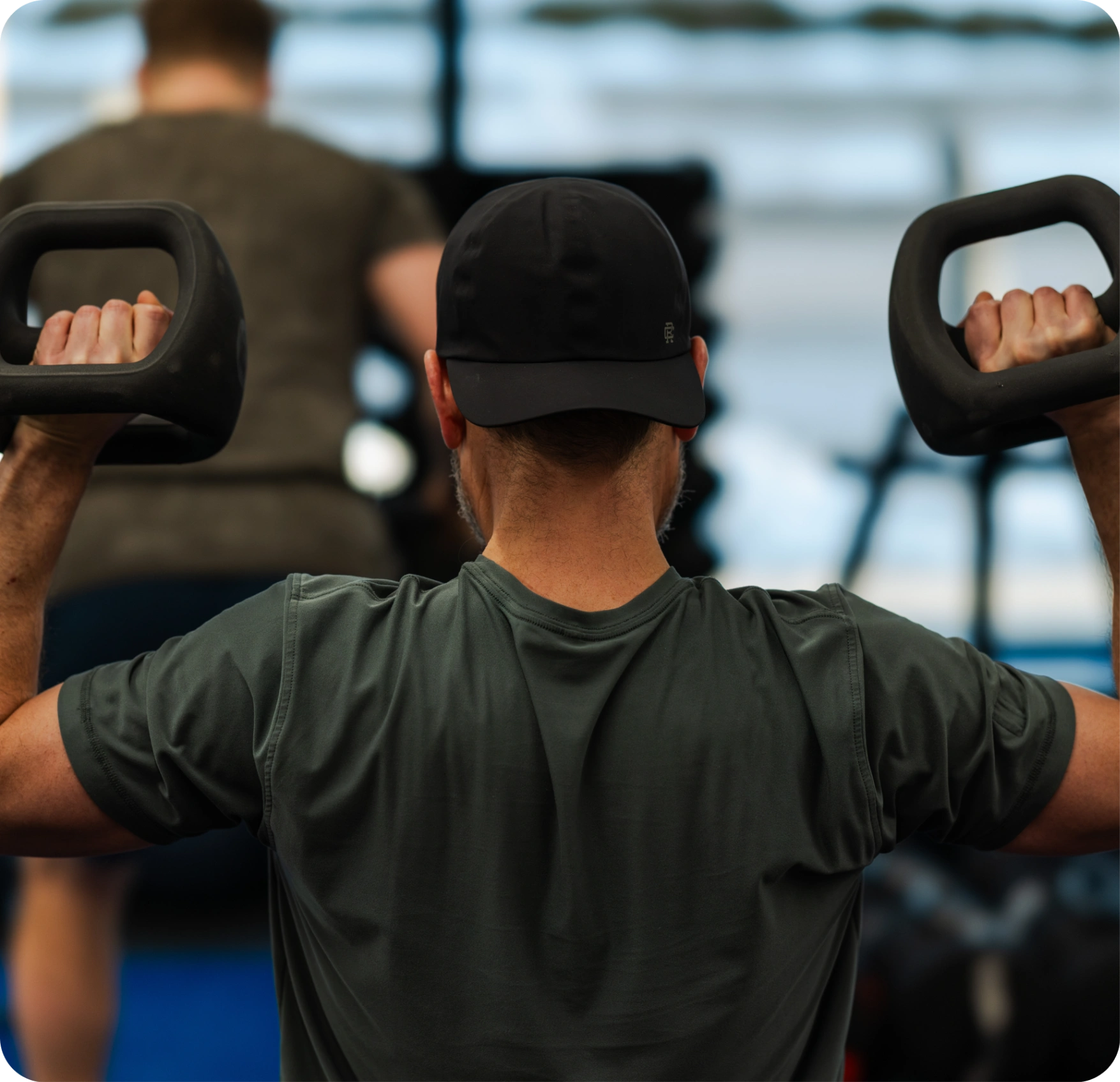
In our resistance workouts, this intensity comes from full-body strength training that builds and maintains muscle. Our trainers are there to help you push harder and lift stronger each session, helping you build strength – even in later stages of life.
5. Try walking meetings or active socializing
Back-to-back meetings? Take one on the move – or swap a seated catch-up for a walk.
This turns time you’d usually spend sedentary into movement – helping you increase your NEAT exercise without needing to carve out extra time in your working day.
You’ll also feel more focused and present in the conversation. Walking side by side can make conversations feel easier and more natural. Taking it outside adds another benefit, too – natural sunlight helps regulate your circadian rhythm, boosting your energy levels and setting you up for stress-free sleep.
6. Set daily movement targets
Struggling to engineer more NEAT exercise into your routine? Start with a clear target to work toward. When your goal is specific, your brain is more likely to follow through.
Simple goals – such as setting a daily step count or aiming for a specific number of workouts each week – give you something concrete to aim for.
What’s more, you can also build movement into habits you already have – like walking after meals or walking when you take calls. This is where NEAT exercise builds and compounds organically – turning small actions into something you do without thinking.
F45 classes play perfectly into this. With set session times and group fitness workouts, these 45-minute blasts of exercise impart structure to your routine – giving you something to show up for, with people around you to keep you accountable.
7. Find moments to breathe and stretch
Take a few minutes to stretch at your desk, in the morning, or before bed. These small resets count as incidental exercise, helping you stay active during slower parts of your day.
Use a mix of dynamic and static stretches to maintain mobility and reduce built-up tension. It’s a simple way to reset your posture and bring your body out of a fixed position.
Try this 30-second stretch:
- Reach your arms overhead
- Slowly fold forward and let your head drop
- Hold, then roll back up to a standing position
Now that you know how to increase TDEE through NEAT exercise, learn how F45 training helps recharge your mitochondria and maintain energy as you age.
1 https://pubmed.ncbi.nlm.nih.gov/12468415/
2 https://pmc.ncbi.nlm.nih.gov/articles/PMC6909896/