It’s fair to say the world needs connection now more than ever – but for many of us, we’ve simply stopped knowing where to look for it. For centuries, humans have carved out a space for exactly this: somewhere that’s neither home nor work. Sociologists call it a “third place.”
But what is a third place?
Also known as a third space, the idea has always meant different things to different people, but the throughline stays the same: it’s somewhere you can show up and be sure someone will be there. More and more, fitness communities are stepping in to fill that gap – offering a built-in routine, the same faces each week, and a reason to show up beyond the workout itself.
In this guide, we’ll explore what a third place is, why fitness lends itself so well to the concept, and how F45’s team training format and environment naturally create connection.
What is a third place?
A third place (or third space) is a location that’s separate from the two places you spend most of your life – home and work1. The term was coined by sociologist Ray Oldenburg in 1989, when he argued that a healthy community needs somewhere to exist beyond these two posts; places where you can connect, without the weight of family or work obligations.
The defining feature of a third place is that it’s common ground – nobody’s hosting, nobody owns the room, and anyone can walk in. Your third space could be a café, park, library, local market, or your local F45 studio.
Why are third places becoming harder to find?
Third spaces can feel hard to come by for a multitude of reasons, but a lot of it can be attributed to how much time we spend online.
Social media keeps us updated on what our friends and family are doing. Dating apps have replaced a lot of the incidental meetings that used to happen in person. Food delivery apps mean fewer trips to the local cafe or corner store. And a multitude of streaming services fill the hours we might once have spent at the movies, a club, or a community hall.
Post-pandemic habits have compounded this trend. With more than half of US adults having reported feelings of isolation, being left out, or lacking companionship2, there’s a broad sense that people have become less accustomed to informal, unplanned social contact – and more inclined to keep interactions scheduled and deliberate.
Which raises a question. If some of our traditional third places are fading, well… what’s stepping in to take their place?
Why fitness studios are becoming the new third place
Fitness communities like F45 are increasingly where people find the kind of low-effort, recurring connection that third places have always provided.
Sure, you could stick to working out at home. But, without an F45 workout to look forward to, you could be missing out on:
- Recurring faces – attending at similar times means you naturally start recognizing the people around you.
- Shared goals – everyone in the room already has a reason to be there.
- Low-pressure interaction – unlike a networking event or organized social occasion, conversation doesn’t have to be the main event.
- Shared effort – tough workouts release oxytocin, the hormone behind trust and bonding, making new connections form faster and feel stronger.
- Common interests – you already share an interest in fitness, wellbeing or self-improvement with everyone in the room.
- Consistency – relationships build gradually through repetition, rather than needing to be forced.
Can your gym help you make friends – or even meet a partner?
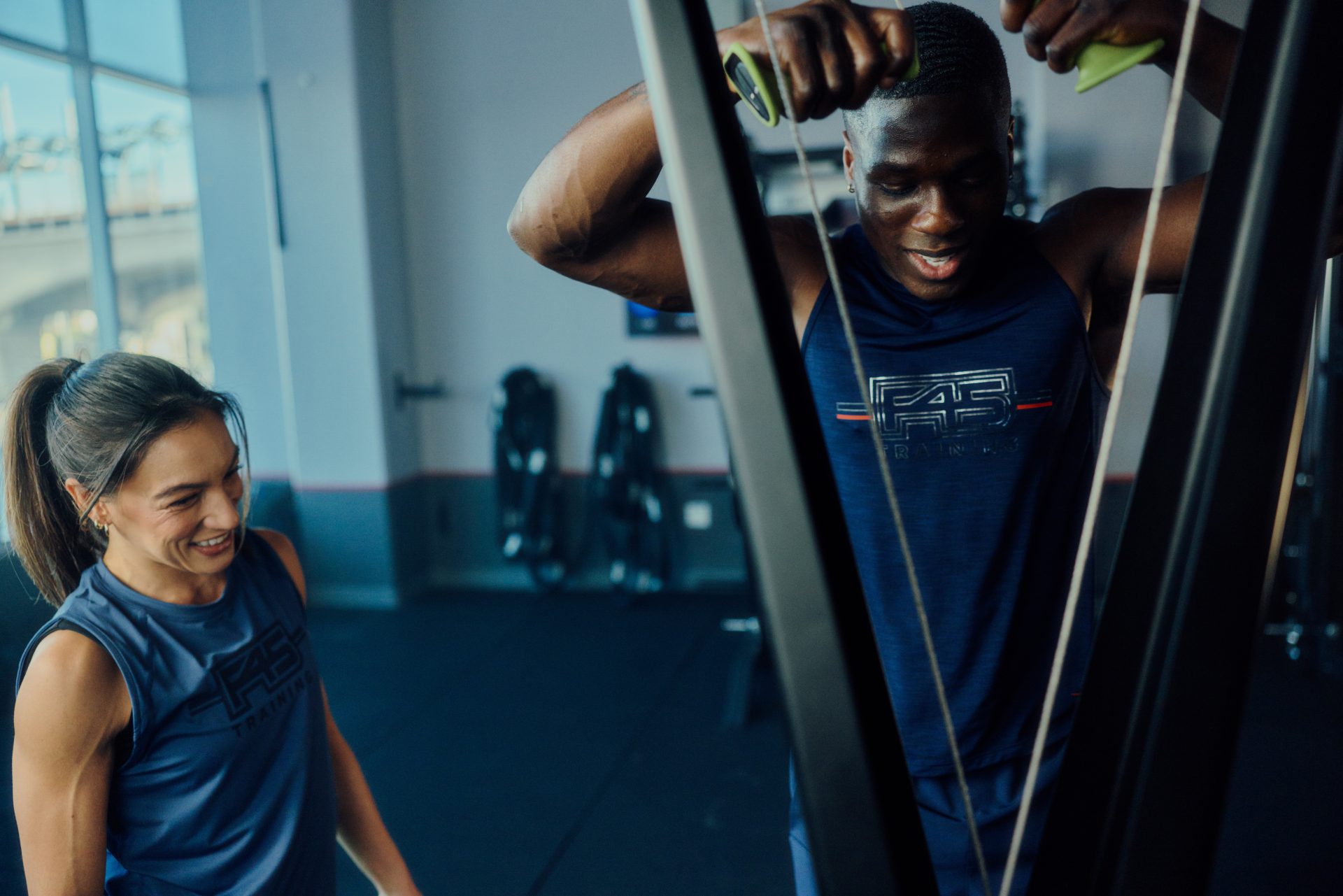
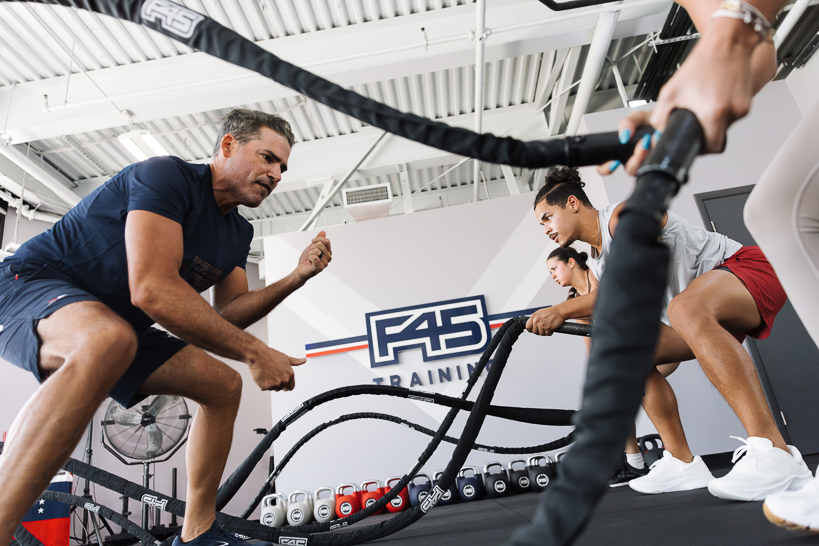
Joining a group workout is a great way to meet new people, because it removes friction. There’s no small talk required to break the ice – you’re all brought together in a welcoming environment with a shared goal, and the workout itself does the introducing for you.
As F45 trainer and athlete Nic Wilson explains, “In our workouts, you move through the stations in small groups, encouraging one another as you go. I see it all the time – people walk in as strangers and leave chatting like they’ve known each other for years.”
Yet this evolution isn’t merely anecdotal – it’s demonstrable. Studies show that people increasingly want to meet in a third space, rather than online. Over 80% of US men and women say they don’t want to use dating apps to meet someone3, while Strava’s 2025 Year in Sport report found 46% of people would say yes to a workout as a first date4 – proof that activity-based dates are becoming a real alternative to the standard dinner-and-drinks.
Why F45 is built to be your third place
Beyond the training, F45 members get a full wellness ecosystem – nutrition guidance to help you eat in line with your goals, recovery and mobility support to keep you moving well between sessions, as well as the F45 Track Challenge, as an option to further invest in their health and engage in the F45 community.
As Wilson explains: “The F45 Track Challenge is a guided 45-day program built around your own specific goals. You choose your focus – Power, Lean or Athlete – and get goal-specific guidance on which classes to prioritize, how often to train, and how to approach each session: including coaching around effort, pacing and intensity.
“Whether you want to build strength, lose weight, improve your body composition, or take your speed, power, and performance to the next level, you’re still training alongside the rest of your studio in the same classes. You’ve got coaches checking in, the endorphins are flowing, and a community of people working towards their own goals alongside you.”
It’s what makes F45 feel less like a gym and more like a third place: a fitness community you can turn to for whatever you need that day – be that training, structure, accountability, or simply the extra energy of having people around you.
Ready to try it for yourself? Find your closest F45 studio to explore how the F45 Track Challenge can help you build a sense of community – and find your third place.
1https://raggeduniversity.co.uk/wpcontent/uploads/2025/01/1_x_ThegreatgoodplaceRayOldenburg2nded.-NewYork-compressed.pdf
2 https://www.apa.org/pubs/reports/stress-in-america/2025
3 https://intel.morningconsult.com/mc-content/analysis/dating-apps-women-gen-z-bad-worse-relationships-reputation-2024
4 https://press.strava.com/articles/strava-releases-12th-annual-year-in-sport-trend-report-2025