What causes us to stress eat? In times of uncertainty, anxious feelings can build and cause us to turn to food as a way to cope and deal with these emotions. In fact, during periods of extended stress, our eating behavior is the first to change. Between the pressure of meeting work expectations and having the kitchen in close quarters, it’s no surprise that stress eating can become a method for suppressing feelings of added pressure. There is absolutely nothing wrong with having comfort food every so often to help through these times. However, if eating becomes the only coping mechanism, we aren’t actually addressing the root cause of the anxiety that’s triggering emotional eating. This could potentially induce more harm to our physical and emotional health long-term versus providing short-term comfort.
Emotional or ‘stress eating’ is when we eat in response to an emotional state rather than when we are actually hungry. We look for comfort in food for both psychological and physiological reasons. Our body releases cortisol, a hormone that is released in response to chronic stress. Research indicates that when levels of cortisol are constantly elevated, it can increase our appetite. Additionally, studies have linked cravings for foods that are higher in fat and sugar to high stress levels because these are ‘high energy foods.’ Our bodies crave these when we are experiencing stress, and simple refined carbohydrates are the quickest way to obtain this energy.
Additionally, these foods generate the ‘feel good’ hormone, dopamine, which causes us to feel a sense of comfort when we indulge. However, when we do not cope with the underlying cause of our anxious feelings, we tend to create a vicious cycle of emotional eating and anxiousness/guilt, both of which can be detrimental to our wellbeing over time. Our anxious feelings cause us to stress eat; however, once we feel satisfied from the comfort food, we tend to feel ‘guilty’ about overindulging. A healthier response to these negative emotions is to become more aware of when we are experiencing them and cope in a more sustainable way. The first step to avoid mindless eating that results from chronic stress is to know the difference between emotional and physical hunger.
1. Stay clear of refined sugar and processed snacks
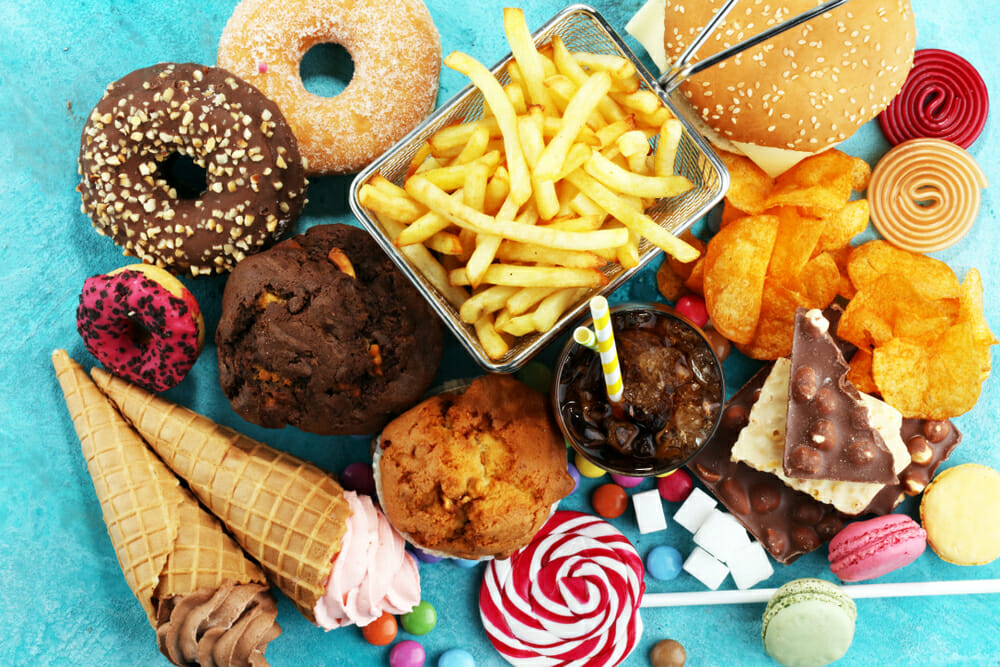
Foods that are high in refined sugar or saturated fats provide lots of energy (calories) but little to no real nutrients. We may feel satisfied while eating them, when in reality these foods have no real sustenance and can contribute to large spikes in blood sugars, and therefore, cravings. This can lead to an emotional eating cycle, where the foods we constantly binge on are the ones that induce the cravings for more. Instead, we recommend opting for protein-dense snacks that will support health and satiety throughout the day to keep you feeling fuller for longer.
2. Eat a well-rounded breakfast
Starting off the day with a healthy, well-rounded breakfast with no added sugar is the ultimate way to avoid cravings. By fueling your body with the right nutrients at the start of the day, you’ll not only feel more focused, but less likely to indulge in those mid-day sugary snacks. A breakfast rich in protein, complex carbs with lots of dietary fiber, and healthy fats will keep you feeling fuller for longer throughout the day. Avoid sugary breakfast cereals or heavily processed carbohydrates, including white flour bagels or store-bought pancake and waffle mixes. Here’s a few of our favorite breakfast ideas to start your day with:
- Rolled oats topped with fresh strawberries and a side of scrambled egg whites.
- A smoothie made with fresh fruit, chia or flax seeds, and Greek yogurt.
- Avocado Ezekiel (Wholegrain) toast topped with egg whites.
3. Quality over quantity
It’s always a good idea to check the nutrition label serving size so that you are aware of what a single portion contains. Additionally, choosing small plates can help with portion control and automatically make us more aware of how much we are eating.

4. Develop a mindful eating approach
When we become more aware of when our hunger cravings occur and what we crave, we automatically create an internal sense of awareness of what is driving us to emotionally eat. The ‘intermittent fasting’ approach, which focuses on meal timing, may be an effective method to become more mindful of how much we are snacking. A recent study showed that late afternoon/evening could be a high-risk period for overeating, particularly when combined with daily stress or anxious feelings. By sticking to an eating window and cycling through periods of fasting and eating, we become more aware of our hunger cues and can avoid ‘binging’ as a coping mechanism. Planning meals and making conscious choices about our eating while avoiding triggers will allow us to stay consistent and on track during stressful periods.
5. Get plenty of exercise
Engaging in daily physical activity has shown to negate some of the negative effects of stress. Going for a walk or doing a short yoga sequence can help you avoid the initial craving for unhealthy snacks. If you’re keeping your mind busy with exercise, you won’t have time to reach for those unhealthy snacks.
As we continue to navigate this stressful period, it’s completely normal to feel increasingly stressed and experience changes in eating patterns. If you’ve tried all the above but are still struggling to gain control of your current eating pattern, we recommend getting some support from a nutritionist or dietician.
6. Understand when you’re actually hungry
There are two types of hunger to understand, psychological and physical, and it is sometimes hard to distinguish between the two.
- Physical hunger – This is when your stomach is empty and your brain signals that it is hungry by initiating stomach growling, thoughts about food, and feelings of irritability, tiredness and poor concentration. When you are physically hungry, any food will satisfy you, and this is actually a good thing! Feeling your hunger cues is important and a great way to know if you are consuming adequate food or not.
- Psychological hunger – This is when we eat due to our emotions, whether it be boredom, stress, sadness or loneliness, which often leads to feelings of regret or guilt. During this time of isolation, it is more likely that you will reach for foods like ice cream, chocolate, and chips, as these make us “feel good.” Psychological hunger can lead to a binge on these particular foods, as we may ignore our fullness cues.
So, how do I determine between physical and psychological hunger?
There are some key differences between the two, outlined below:
Physical hunger
- Increases gradually
- Can be fulfilled by a piece of fruit
- You can wait to eat, but need to soon
- Occurs in response to a sensation in your body, i.e. a rumbling stomach
- A deliberate choice of food, eaten with awareness
- A sense of satisfaction after eating
- No guilt
Psychological hunger
- Comes on suddenly
- You want a particular type of food
- You need food with a sense of urgency
- Occurs in response to an emotion, i.e. boredom, stress, sadness or loneliness
- An impulse choice, eaten quickly without much thought
- You still want more or a different type of food
- Feelings of guilt, regret
Another way to determine if the hunger you feel is physical or psychological is to do the “apple test.” Next time you think you are hungry or are craving a snack, ask yourself if you would still want this food if all that you had available was an apple. If the answer is yes, then you are most likely feeling physical hunger. If not, you may be acting on an emotional trigger and would benefit from taking the time to reflect on what you are feeling in that moment.
Now you’ve learned about the science behind stress eating, brush up on what science has to say about sugar addiction with our in-depth guide.